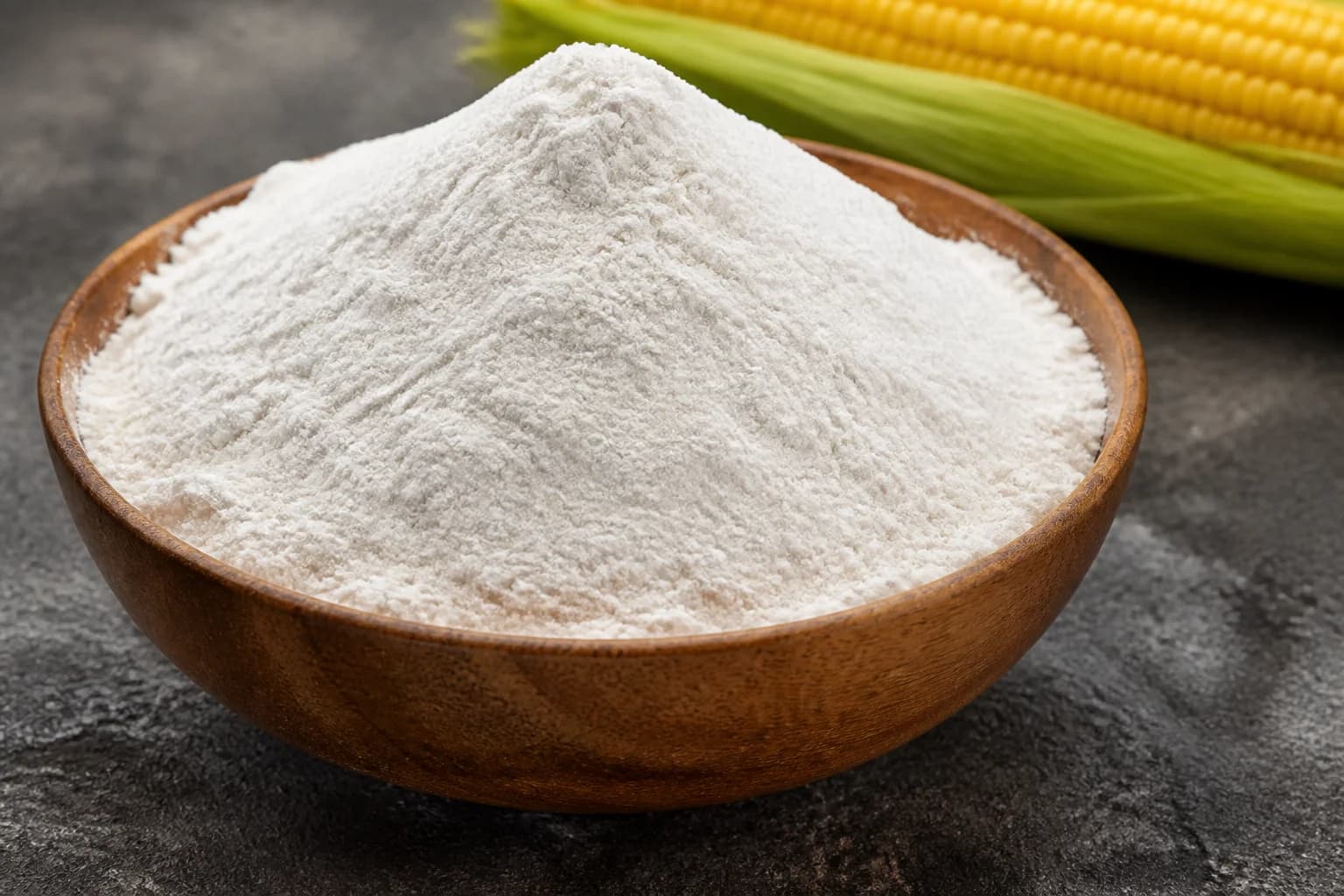
Maltodextrin
ELVISCTM – MDX G1
Get Pricing For This Product
Need pricing? Request a quote for this product and we'll get back to you shortly.
Speed Up Your Sample Testing Process
Express Delivery in 24–48 Hours
Maltodextrin is a hygroscopic, spray-dried white powder that is produced from starch through partial hydrolysis. Due to flexible properties like moderate or neutral taste, binding properties,…
CAS Number
9050-36-6
HS Code
1702.90.90
INCI Name
Maltodextrin
Molecular Formula
(C₆H₁₀O₅)ₙ (polymeric, n = 3–20+)
Maltodextrin
ELVISCTM – MDX G1
Maltodextrin is a hygroscopic, spray-dried white powder that is produced from starch through partial hydrolysis. Due to flexible properties like moderate or neutral taste, binding properties, solubility, etc. It has a wide range of applications in the food and pharmaceutical…
CAS Number
9050-36-6
INCI Name
Maltodextrin
HS Code
1702.90.90
Molecular Formula
(C₆H₁₀O₅)ₙ (polymeric, n = 3–20+)
Get Pricing For This Product
Need pricing? Request a quote for this product and we'll get back to you shortly.
Speed Up Your Sample Testing Process
We deliver domestic samples within 24 - 48 hours, helping you evaluate product without delays.
Product Specification
Physical Properties
| Property | Specification |
|---|---|
| Appearance | White powder |
| Odor | Odorless |
| Molecular Weight (G/Mol) | 162.1 |
| Density Or Specific Gravity | 1.81 g/cm3 |
| Refractive Index | 1.673 |
| Density | 1.81 g/cm3 |
Chemical Properties
| Property | Specification |
|---|---|
| Incompatibilities | Strong oxidizing agents. |
Thermal Properties
| Property | Specification |
|---|---|
| Melting Point | 240 °C |
Processing Methods & Reference Formulations
A. Cosmetic cream
To avoid lump formation, pre-mix Maltodextrin with a portion of warm water before adding it into the main batch. Stir well to ensure smooth dispersion.
| Key Ingredients | Indicative Dosage (% w/w) |
|---|---|
| Deionized Water (Aqua) | 75.0% |
| Glycerin | 5.0% |
| Maltodextrin | 5.0% |
| Propylene Glycol | 3.0% |
| Butyrospermum Parkii (Shea) Butter | 4.0% |
| Cetearyl Alcohol | 2.0% |
| Glyceryl Stearate | 2.0% |
| Caprylic/Capric Triglyceride | 2.0% |
| Tocopherol (Vitamin E) | 0.5% |
| Carbomer 940 | 0.2% |
| Triethanolamine | 0.3% |
| Phenoxyethanol | 0.8% |
| Fragrance | 0.5% |
B. Shampoo
Incorporate Maltodextrin into the water phase at room temperature or warm under moderate stirring to ensure full dispersion and prevent clumping. Always use an appropriate preservative system and maintain pH between 4.5 and 6.5 for product stability.
| Key Ingredients | Indicative Dosage (% w/w) |
|---|---|
| Water (Aqua) | 35–70% |
| Sodium Laureth Sulfate or Ether Sulfate | 15–60% |
| Cocamidopropyl Betaine or Sarcosinate or Betaines | 5–20% |
| Saccharide (e.g., maltodextrin, corn syrup, or fructose syrup) | 10–70% |
| Preservative (e.g., benzisothiazolinone or methylisothiazolinone) | 0.1–1% |
| Perfume/Fragrance | 0.2–1% |
| pH adjuster (e.g., citric acid) | q.s. to pH ~5–7 |
C. Hair conditioners
Disperse Maltodextrin into the aqueous phase under moderate stirring to ensure full dissolution and avoid graininess in the final product. Enhance performance by blending with cationic surfactants and emollients.
| Key Ingredients | Indicative Dosage (% w/w) |
|---|---|
| Zea mays (Corn) Starch | 35–55% |
| Maltodextrin | ~2–3% |
| Behentrimonium Methosulfate | 5–15% |
| Cetyl/Stearyl Alcohol | 5–15% |
| Optional Fatty Acid/Salt (e.g., Stearic Acid) | 0.1–20% |
| Additives (Fragrance, Color) | Balance |
Dosing Guidelines
A. Dosing by Application
| Products | Authorized dosage % |
|---|---|
| Moisturizing creams & lotions | 5-30% |
| Shampoos & conditioners | 5-30% |
About Maltodextrin
Maltodextrin, a polysaccharide of general formula (C6H10O5)n, is one of the highest-volume processed carbohydrates in the food and nutrition industry. Produced by controlled hydrolysis of starch to a dextrose equivalent (DE) of 3 to 20, it functions as a bulking agent, spray-drying carrier, viscosity builder, film former and readily digestible energy source across beverages, sports nutrition, confectionery, dairy, seasonings and pharmaceutical formulation.
Maltodextrin is sourced globally at tonnage scale, and for most buyers dependable supply is as much about DE consistency, solubility and documentation as it is about chemistry. Maltodextrin (CAS 9050-36-6) is affirmed GRAS by the US FDA under 21 CFR 184.1444 and carries FCC and USP-NF/Ph.Eur. monographs for food and pharmaceutical use.
Industrial buyers placing bulk orders also keep a close eye on maltodextrin pricing, since contract rates feed directly into the cost of everything they produce downstream.
Manufacturing Process of Maltodextrin
Maltodextrin is produced by the partial hydrolysis of food-grade starch - most commonly corn, but also tapioca, wheat, potato or rice. A refined starch slurry is treated with acid and/or thermostable alpha-amylase enzyme, which cleaves the starch chains into shorter glucose polymers. The reaction is stopped at the target dextrose equivalent (DE 3–20), then the liquor is refined, filtered through activated carbon, ion-exchanged, concentrated by evaporation and spray-dried into a free-flowing white powder. DE is the master control parameter: lower DE gives less sweetness, higher viscosity and better film formation; higher DE gives greater solubility, sweetness and hygroscopicity.
Every shipment of Elchemy supplies is tested for moisture, DE, pH and microbiological limits before dispatch, with a Certificate of Analysis travelling alongside each order.
Maltodextrin Price: Bulk Pricing for Industrial Buyers
If you're looking for current maltodextrin pricing for bulk procurement, Elchemy provides quotes based on your specific requirements. Fill out the quote request form with your volume, grade, destination and packaging preference, and our team will revert with a detailed offer within 24 to 48 hours.
Pricing works on a quote basis rather than a published rate because the cost is driven by the maize (or tapioca) crop cycle and the enzyme/energy cost of hydrolysis and spray drying, rather than tracking a fixed list.
Beyond that, several factors layer in to shape the final number: grade, committed volume, origin country, packaging format, freight, Incoterm choice (FOB, CIF or DDP) and applicable import duty (HTS 1702.90 for US-bound shipments).
For an approximate read on where the market sits, procurement teams often reference corn futures and regional starch-sweetener price indices, which give a sense of how rates are trending.
Trade publications also report the maltodextrin price per kg as a unit-level benchmark, useful for spotting short-term regional shifts even on large industrial orders.
At bulk procurement scale, however, the maltodextrin price per ton is the most relevant commercial unit, since contracts are typically negotiated and committed at that level.
For an exact rate, none of these references replaces a direct quote. The actual price depends on your contract structure, destination, committed volume and timing of dispatch, which is why a quote from our team will always be the most accurate number for your specific procurement.
Packaging & Logistics
Maltodextrin ships in 25 kg (55 lb) bags, 50 lb bags for the US market, or 1 MT (2,205 lb) FIBC jumbo bags (liquids ship in drums, IBCs or ISO tanks as applicable), supplied as per buyer requirements. A typical 20' container holds approximately 18 to 24 MT depending on packaging.
For US-bound orders, domestic stock supports faster fulfilment. Where sourcing is required from origin countries, transit times typically run 24 to 28 days to the US East Coast and 18 to 22 days to the West Coast. Elchemy offers EXW, FOB, CIF and DDP terms, depending on how your procurement team prefers to handle landed cost and customs.
Material should be stored in a cool, dry, well-ventilated area per the storage conditions on the TDS. Standard dispatch follows agreed contract terms, with expedited timelines available where needed. Samples are dispatched within 24 to 48 hours.
Why Choose Elchemy as a Trusted Maltodextrin Supplier?
Elchemy makes maltodextrin procurement straightforward for industrial buyers. That means consistent material across the grades listed above, with a Certificate of Analysis for every batch and full documentation (TDS, SDS) as standard.
Because we source across multiple origins, we quote on the best landed cost for your destination rather than a single manufacturer's list price. Our partner plants operate to recognised quality standards (ISO 9001, plus food/pharma certifications where relevant), with Halal and Kosher certification available on request.
Beyond the US, Elchemy ships into 40+ countries with samples available for qualification before any bulk order, and pricing tailored to volume, destination and contract terms.
Safety & Handling
Not classified as hazardous under OSHA HazCom 2012 (GHS) and not DOT-regulated. Fine airborne powder is a combustible dust.
Maltodextrin is a food-grade, non-toxic, readily digestible carbohydrate with no acute or chronic toxicity at normal use levels. It is not classified as hazardous under GHS. Occupational considerations are limited to nuisance dust (mechanical eye/respiratory irritation) and combustible-dust risk in enclosed bulk handling - follow NFPA 61/652. Note that maltodextrin has a high glycaemic index; this is a formulation/labelling consideration for diabetic-targeted products, not a handling hazard.
The full 16-section GHS-aligned SDS is available alongside material orders.
- Quick Energy Source: Easily digestible carbohydrate ideal for sports and energy products.
- Textural Improvement: Enhances mouthfeel and texture in low-fat foods.
- Solubility Enhancer: Improves solubility of powdered formulations in beverages.
- Versatile Application: Widely used in food, beverage, and nutritional supplements.
About Maltodextrin
Maltodextrin, a polysaccharide of general formula (C6H10O5)n, is one of the highest-volume processed carbohydrates in the food and nutrition industry. Produced by controlled hydrolysis of starch to a dextrose equivalent (DE) of 3 to 20, it functions as a bulking agent, spray-drying carrier, viscosity builder, film former and readily digestible energy source across beverages, sports nutrition, confectionery, dairy, seasonings and pharmaceutical formulation.
Maltodextrin is sourced globally at tonnage scale, and for most buyers dependable supply is as much about DE consistency, solubility and documentation as it is about chemistry. Maltodextrin (CAS 9050-36-6) is affirmed GRAS by the US FDA under 21 CFR 184.1444 and carries FCC and USP-NF/Ph.Eur. monographs for food and pharmaceutical use.
Industrial buyers placing bulk orders also keep a close eye on maltodextrin pricing, since contract rates feed directly into the cost of everything they produce downstream.
Manufacturing Process of Maltodextrin
Maltodextrin is produced by the partial hydrolysis of food-grade starch - most commonly corn, but also tapioca, wheat, potato or rice. A refined starch slurry is treated with acid and/or thermostable alpha-amylase enzyme, which cleaves the starch chains into shorter glucose polymers. The reaction is stopped at the target dextrose equivalent (DE 3–20), then the liquor is refined, filtered through activated carbon, ion-exchanged, concentrated by evaporation and spray-dried into a free-flowing white powder. DE is the master control parameter: lower DE gives less sweetness, higher viscosity and better film formation; higher DE gives greater solubility, sweetness and hygroscopicity.
Every shipment of Elchemy supplies is tested for moisture, DE, pH and microbiological limits before dispatch, with a Certificate of Analysis travelling alongside each order.
Maltodextrin Price: Bulk Pricing for Industrial Buyers
If you're looking for current maltodextrin pricing for bulk procurement, Elchemy provides quotes based on your specific requirements. Fill out the quote request form with your volume, grade, destination and packaging preference, and our team will revert with a detailed offer within 24 to 48 hours.
Pricing works on a quote basis rather than a published rate because the cost is driven by the maize (or tapioca) crop cycle and the enzyme/energy cost of hydrolysis and spray drying, rather than tracking a fixed list.
Beyond that, several factors layer in to shape the final number: grade, committed volume, origin country, packaging format, freight, Incoterm choice (FOB, CIF or DDP) and applicable import duty (HTS 1702.90 for US-bound shipments).
For an approximate read on where the market sits, procurement teams often reference corn futures and regional starch-sweetener price indices, which give a sense of how rates are trending.
Trade publications also report the maltodextrin price per kg as a unit-level benchmark, useful for spotting short-term regional shifts even on large industrial orders.
At bulk procurement scale, however, the maltodextrin price per ton is the most relevant commercial unit, since contracts are typically negotiated and committed at that level.
For an exact rate, none of these references replaces a direct quote. The actual price depends on your contract structure, destination, committed volume and timing of dispatch, which is why a quote from our team will always be the most accurate number for your specific procurement.
Packaging & Logistics
Maltodextrin ships in 25 kg (55 lb) bags, 50 lb bags for the US market, or 1 MT (2,205 lb) FIBC jumbo bags (liquids ship in drums, IBCs or ISO tanks as applicable), supplied as per buyer requirements. A typical 20' container holds approximately 18 to 24 MT depending on packaging.
For US-bound orders, domestic stock supports faster fulfilment. Where sourcing is required from origin countries, transit times typically run 24 to 28 days to the US East Coast and 18 to 22 days to the West Coast. Elchemy offers EXW, FOB, CIF and DDP terms, depending on how your procurement team prefers to handle landed cost and customs.
Material should be stored in a cool, dry, well-ventilated area per the storage conditions on the TDS. Standard dispatch follows agreed contract terms, with expedited timelines available where needed. Samples are dispatched within 24 to 48 hours.
Why Choose Elchemy as a Trusted Maltodextrin Supplier?
Elchemy makes maltodextrin procurement straightforward for industrial buyers. That means consistent material across the grades listed above, with a Certificate of Analysis for every batch and full documentation (TDS, SDS) as standard.
Because we source across multiple origins, we quote on the best landed cost for your destination rather than a single manufacturer's list price. Our partner plants operate to recognised quality standards (ISO 9001, plus food/pharma certifications where relevant), with Halal and Kosher certification available on request.
Beyond the US, Elchemy ships into 40+ countries with samples available for qualification before any bulk order, and pricing tailored to volume, destination and contract terms.
Safety & Handling
Not classified as hazardous under OSHA HazCom 2012 (GHS) and not DOT-regulated. Fine airborne powder is a combustible dust.
Maltodextrin is a food-grade, non-toxic, readily digestible carbohydrate with no acute or chronic toxicity at normal use levels. It is not classified as hazardous under GHS. Occupational considerations are limited to nuisance dust (mechanical eye/respiratory irritation) and combustible-dust risk in enclosed bulk handling - follow NFPA 61/652. Note that maltodextrin has a high glycaemic index; this is a formulation/labelling consideration for diabetic-targeted products, not a handling hazard.
The full 16-section GHS-aligned SDS is available alongside material orders.
- Quick Energy Source: Easily digestible carbohydrate ideal for sports and energy products.
- Textural Improvement: Enhances mouthfeel and texture in low-fat foods.
- Solubility Enhancer: Improves solubility of powdered formulations in beverages.
- Versatile Application: Widely used in food, beverage, and nutritional supplements.
Regulatory Compliance
| Region | Max Allowed Level | Notes | Certification Body |
|---|---|---|---|
| Australia | - | No maximum usage limit for cosmetics. | - |
| China | - | Not specifically restricted in the Inventory of Existing Chemical Substances (IECSC); permitted in cosmetics. | - |
| Japan | - | No specific usage limit; permitted as a cosmetic ingredient if safe and properly labeled. | - |
| Republic of Korea | - | No explicit max for finished products. | - |
| United States | - | not regulated as hazardous | FDA |
| ASEAN | - | No explicit max for finished products. | - |
| European Union | - | Not prohibited or restricted. No maximum usage limit for cosmetics. | - |
FAQs - Maltodextrin
Related Products


Related Products
Streamline
Your Chemical
Procurement
Get fast responses from real experts